FIREPLACE &
STOVE INSTALLATION
Gas fireplaces, pellet stoves and wood inserts installed to code, with a compliance certificate. Performed by WETT-certified technicians in Camrose, Edmonton, Wetaskiwin and across central Alberta, with a written report included.
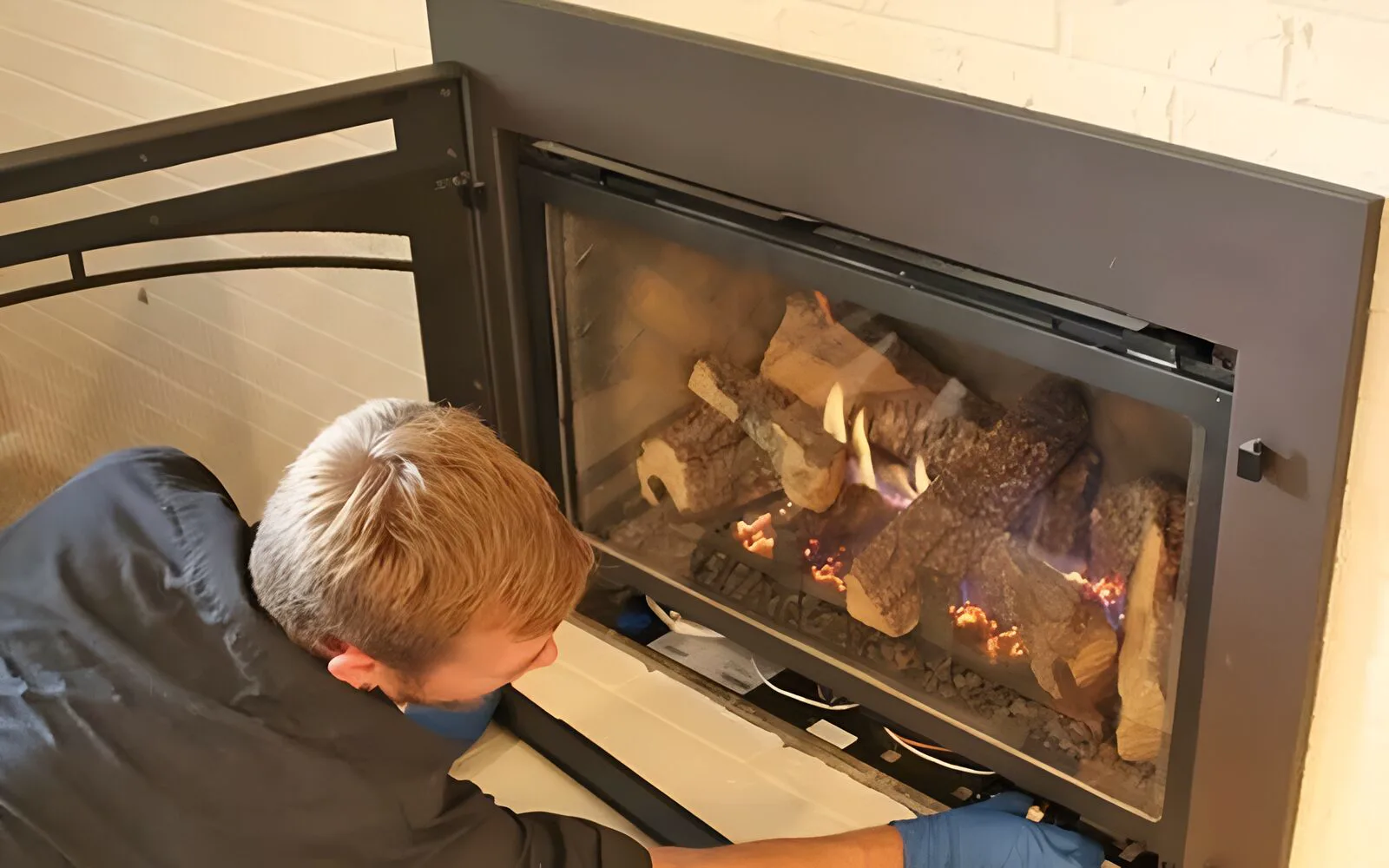
WHAT AN INSTALLATION INCLUDES
Looking to add warmth and efficiency to your home? We install gas fireplaces, pellet stoves, and wood-burning inserts with expert craftsmanship and full code compliance. Properly installed appliances mean safer combustion, better efficiency, and lasting performance.
- Gas fireplace and insert installation
- Pellet stove installation and venting
- Wood-burning insert fitting and liner sizing
- Full venting system design and installation
- WETT inspection and compliance certificate included
WHY THE VENTING MATTERS AS MUCH AS THE APPLIANCE
A wood or pellet appliance is only as safe as the system that vents it. Liner diameter, chimney height, clearance to combustibles and the connector run all have to match the appliance the manufacturer certified — get one of them wrong and you get poor draft, spillage, or a unit that fails inspection.
That is the part we design, not just install. Every installation we complete ends with a WETT inspection and a compliance certificate, which is the paperwork your insurer will ask for on a newly installed wood-burning appliance.
WOOD, GAS OR PELLET — WHAT ACTUALLY DIFFERS
Most people arrive at this decision thinking about how a fire looks. The differences that matter more in daily use are fuel handling, what happens in a power cut, and how much maintenance you are signing up for.
Wood gives the most heat for the money if you have access to firewood, and it keeps working when the power is out. In exchange you handle, store and season the fuel yourself, you clean ash, and you commit to an annual sweep. Wood also has the most demanding venting and clearance requirements of the three.
Gas is the low-effort option: instant, thermostat-controlled, no fuel to store, no creosote. It still needs annual servicing on the venting and burner, and most units will not run without electricity for ignition and the fan. Running cost depends on gas prices rather than on your woodpile.
Pellet sits between the two. Pellets are a manufactured fuel bought in bags, so handling is cleaner than cordwood, and the burn is efficient and largely automatic. Pellet stoves need power to run the auger and fan, and they need regular cleaning of the burn pot and ash pan — more often than a gas unit, less messy than wood.
Whichever you choose, the appliance is the easy part. What determines whether the installation is safe and legal is everything around it.
WHAT THE JOB INVOLVES
An installation starts with a site assessment rather than a delivery. We look at where you want the appliance, what the existing chimney or vent route can support, what the floor and surrounding walls are made of, and whether the clearances the manufacturer specifies can actually be achieved in that spot. Occasionally the answer is that the appliance you have chosen will not work where you want it, and it is much cheaper to hear that before it is bought.
From there the work is the venting system, the hearth pad and floor protection, the clearances to combustibles, and the connection itself. On a wood insert going into an existing masonry fireplace, a correctly sized liner running the full height of the chimney is usually part of the job — an insert vented into an oversized old flue will not draft properly and will build creosote faster.
Every installation we complete finishes with a WETT inspection and a compliance certificate. That document is what your insurer will ask for, and it is worth keeping with your house papers rather than in a drawer.
What it costs
Installation is not a fixed-price service. Our chimney services start at $240 plus applicable taxes, but an installation quote depends on the appliance, the venting route, whether a liner is needed and what the existing structure is like. We quote after looking, not over the phone, and you are not committed to anything by having it assessed.
After the install
New appliances still need annual maintenance. Book a sweep each heating season, and read up on what the WETT inspection on your new appliance actually certifies.
INSTALLATION,
ANSWERED
Do I need a permit to install a wood stove or fireplace?
In most Alberta municipalities a solid-fuel appliance installation requires a permit, and gas appliances involve a gas permit as well — but the specifics and the fees vary between municipalities, so the only reliable answer comes from your local authority. What we can tell you is what is typical for your area and what documentation the inspection will call for. Do not let anyone talk you into skipping it: an unpermitted installation is exactly the thing that surfaces later during a home sale or an insurance claim.
Can I install a wood stove myself?
Physically, a stove is not difficult to put in place. The parts that go wrong are the parts that are not obvious — clearances to combustibles behind and beside the appliance, correct floor protection, liner sizing, connector pipe slope and how it enters the chimney. Those are also precisely what a WETT inspection assesses and what an insurer relies on. A self-installed appliance that cannot pass inspection is a problem you discover at the worst possible time, usually when you are trying to sell the house.
Can an existing wood fireplace be converted to gas?
Usually yes. A gas insert fitted into an existing masonry fireplace is one of the more common jobs we do, and it is often the cheapest way to get a usable, low-maintenance fire out of a fireplace nobody lights any more. The chimney still needs assessing — the existing flue generally has to be lined to suit the new appliance rather than left as it is. Whether it is worth doing depends on the condition of the masonry, which is something to establish before buying the insert.
Can you install into an existing chimney, or does it need rebuilding?
Existing chimneys are used far more often than they are rebuilt. What matters is condition and sizing rather than age: whether the structure is sound, whether the flue can be lined to the diameter the new appliance requires, and whether the height and clearances work. A chimney that looks rough from the ground is frequently fine once it has been looked at properly. We assess this before quoting rather than assuming either way.
How long does an installation take?
A straightforward gas insert into a prepared opening can be a single day. A wood appliance needing a full liner run, hearth construction or any structural work is more, and if a permit inspection has to be scheduled the calendar time is longer than the working time. You will get a realistic schedule with the quote, including anything that depends on someone other than us.
READY TO GET
STARTED?
Schedule online in minutes, or call us directly. We serve Camrose, Edmonton, Wetaskiwin and central Alberta.