CHIMNEY
REPAIRS
Liners, crowns, mortar, caps and dampers — diagnosed clearly and quoted after we look. Performed by WETT-certified technicians in Camrose, Edmonton, Wetaskiwin and across central Alberta, with a written report included.
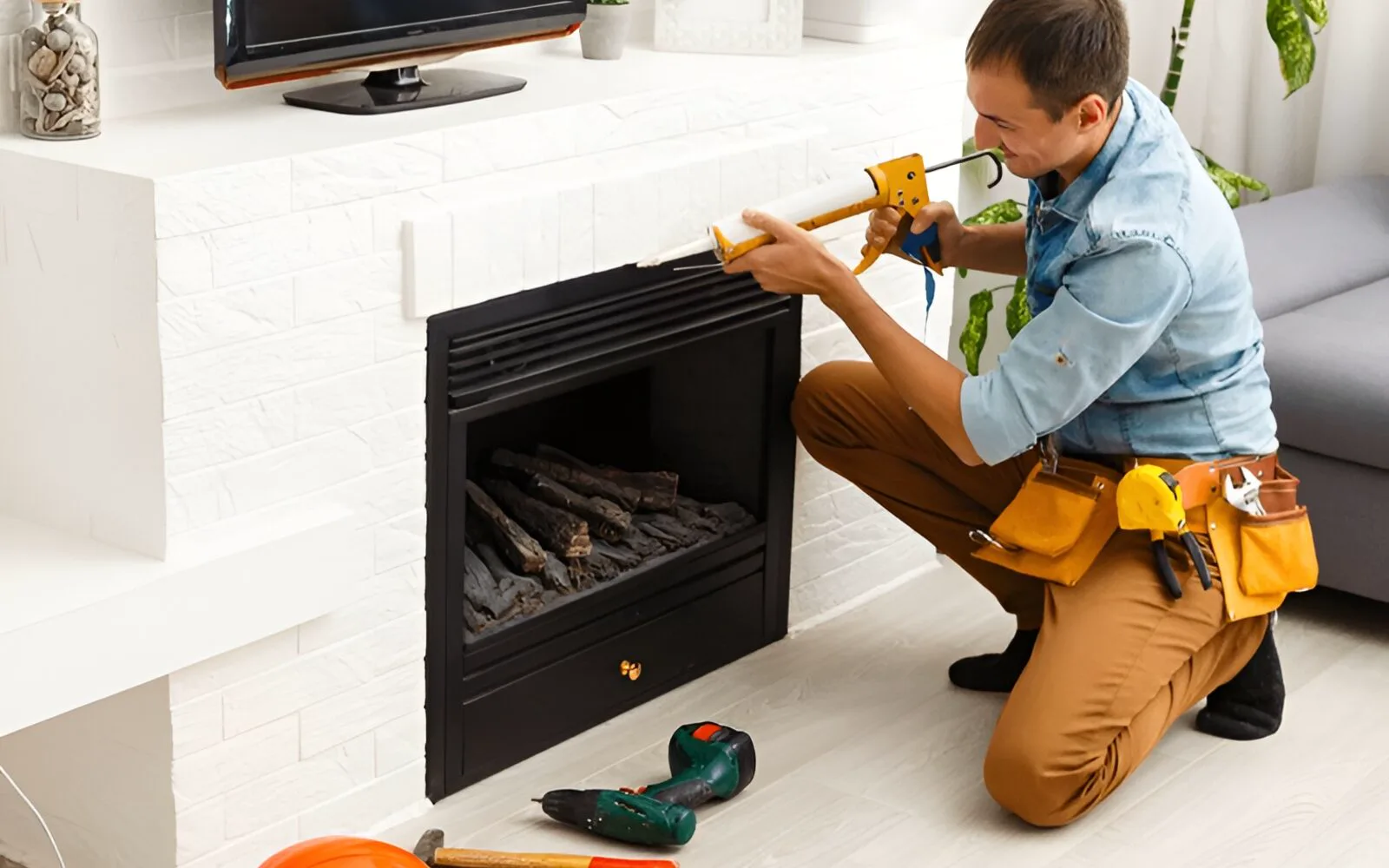
WHAT WE REPAIR
From cracked mortar joints to collapsed flue liners, we handle all types of chimney repairs. We'll diagnose the issue clearly and explain what needs fixing — no upselling, no surprises, ever.
- Flue liner repair and full relining
- Crown repair and waterproofing
- Mortar joint repointing (tuckpointing)
- Cap replacement and damper repair
- Firebox rebuild and smoke chamber repair
HOW REPAIR PRICING WORKS
Chimney repair is not a fixed-price service, and we will not pretend otherwise. A hairline crack in a crown and a fully collapsed clay liner are different jobs with different materials, so we assess the chimney first, show you what we found, and then quote the work.
You are never committed to the repair by getting it looked at. If the honest answer is that the chimney is fine and does not need the work someone else recommended, that is what we will tell you.
THE FIVE THINGS THAT ACTUALLY GO WRONG
Chimney problems sound varied but most of them come back to the same short list, and nearly all of them start with water getting somewhere it should not.
The crown is the sloped concrete slab on top of the masonry. It sheds rain away from the flue. When it cracks, water runs straight down inside the chimney instead of off it, and everything below starts deteriorating at once. A cracked crown is the single most common root cause we find.
The flashing is the metal seal where the chimney meets the roof. Failed flashing shows up inside the house as a stain on the ceiling near the chimney breast, which people usually mistake for a roof leak.
The liner carries combustion gases up and out. Clay tile liners crack; older chimneys sometimes have no liner at all. A cracked or missing liner means heat and gases reaching the surrounding structure, which is why this one is treated as urgent rather than cosmetic.
The mortar and brick fail from freeze-thaw. Joints open up, brick faces flake off — that is spalling — and once enough material has gone, repointing is no longer sufficient.
The damper and cap are the small parts with outsized consequences. A damper that no longer seats leaks heated air all winter. A missing cap lets in rain, snow and birds.
WHAT IT LOOKS LIKE FROM INSIDE THE HOUSE
Most homeowners do not notice a chimney problem on the chimney. They notice it somewhere else and do not connect the two.
A damp patch or brown staining on the wall or ceiling near the chimney breast usually means crown or flashing. A strong smoky or tarry smell when nothing is burning usually means moisture reacting with creosote deposits inside the flue. Smoke pushing back into the room points to a blockage, a stuck damper or a draft problem. Rust on the damper or firebox means water has been getting in for a while already.
None of those are reasons to keep using the appliance while you wait and see. A blockage that pushes smoke into the room is also pushing combustion gases into the room.
Repair or rebuild?
Sometimes the honest answer is that patching is throwing money at a chimney that needs rebuilding. If mortar joints have eroded deeply across most of the stack, or brick faces have spalled over a large area, repointing will look better for a season or two and then fail again in the same places. We would rather tell you that up front than take payment twice.
The reverse is also true, and more common. Plenty of chimneys that look alarming from the ground need a crown repair and a cap, not a rebuild.
Repairs found during an inspection
Most repairs we do are discovered during a sweep or an inspection rather than reported by the homeowner. If you are buying or selling a home and a report has flagged chimney defects, a WETT inspection is usually the document that names them, and a sweep is often what clears the flue enough to see the damage properly.
CHIMNEY REPAIRS,
ANSWERED
Can chimney repairs be done in winter?
Some can, some genuinely cannot. Anything involving mortar — repointing, crown repair, rebuilding — needs temperatures above roughly five degrees to cure properly, and mortar laid in the cold will fail early no matter how well it is applied. Liner work, cap and damper replacement and most interior repairs are less weather-dependent. If you call us in January about a cracked crown, expect us to inspect it, make the appliance safe to use if it can be made safe, and book the masonry for spring.
My home inspector flagged the chimney. Do I need everything on that list done?
Not necessarily, and it is worth having someone look before you accept the whole list. Home inspectors are generalists working from the ground and the roof edge, and they are professionally obliged to flag anything they cannot rule out. Some of what gets listed is genuinely urgent, some is cosmetic, and some turns out not to be a defect at all. We will go through the report item by item and tell you which is which — including the items we think you can ignore.
How long does a chimney repair take?
It depends entirely on what is being repaired. A cap or damper replacement is usually the same visit. Crown repair and repointing are typically a day, sometimes two, plus curing time before the appliance should be used. A full reline or a rebuild is a multi-day job. You will get a realistic timeframe with the quote rather than after the work has started.
Do I need a WETT inspection after repair work?
Not automatically. A WETT inspection is documentation of an installation against the Canadian standard, and it is usually triggered by an insurer, a home sale or a new appliance rather than by repair work itself. That said, if the repair was substantial — a reline, a rebuild, work on clearances — having a current report on file afterwards is often what an insurer will want to see. What a WETT inspection covers explains when one is actually required.
Can I just seal a cracked crown myself?
Hardware-store crown sealers exist and on a genuinely minor hairline crack, on a crown that is otherwise sound, they can buy time. The problems are that crown cracking is frequently worse than it looks from the ground, that reaching it safely means roof work, and that sealing over a crown which has already let water into the masonry below traps the moisture rather than stopping it. If you cannot see the whole crown clearly, you cannot tell which situation you are in.
READY TO GET
STARTED?
Schedule online in minutes, or call us directly. We serve Camrose, Edmonton, Wetaskiwin and central Alberta.